Welcome to SPICES 2026
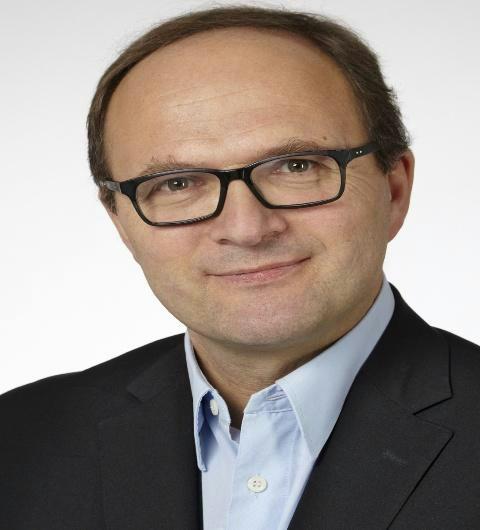
Dr. Axel Sikora
Offenburg University, Germany
Dr. Axel Sikora is a full professor at Offenburg University, Germany, where he serves as Scientific Director of the Institute of Reliable Embedded Systems and Communication Electronics, a leading R&D institute for secure, safe, wireless, real-time, modular IIoT connectivity solutions. Dr. Sikora is also engaging in several standardization activities around secure and efficient IIoT connectivity. Since many years, he is serving as chairman of the embedded world Conference, the world's largest event on the topic.
In parallel, he is engaged in some deep-tech spinoff companies. He has authored and co-edited several textbooks, around a dozen of patents, and more than 350 scientific papers.
Read More
Title: Security for Networked OT-Systems in the Era of Intelligent Cybercrime
Abstract:
These years see increasing geopolitical tension, increasing generative AI capabilities, and increasing safety requirements of autonomous systems, which leads to the massive need for security solutions. The keynote will give an overview on some examples of cyberattacks on networked Operational Technology (OT) systems and describe the risks especially for intelligent and autonomous systems. On the defense side, an increasing number of countermeasures can be observed.
This includes integration of cryptographic protocols and credential management into deeply embedded OT network protocols, like for PROFINET, CAN, Ethernet or Wireless M-Bus. Also, automatic Intrusion Detection (IDS) and Security Information and Event Management (SIEM)-systems are an object of research and development with a special focus on the specific requirements of OT networks.
Read More
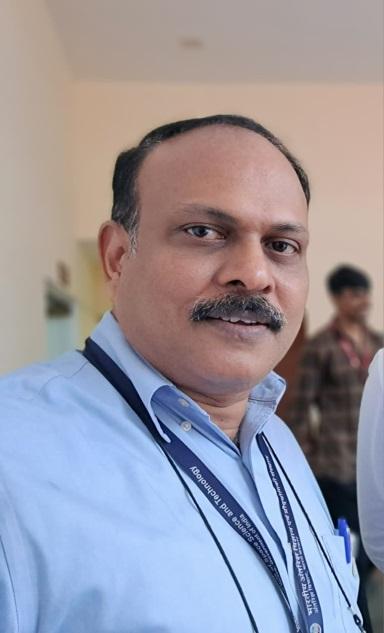
Dr. Manoj BS
Senior Professor, IIST Trivandrum, and Distinguished Lecturer, IEEE Communications Society
Prof. Manoj BS is a Senior Professor, IIST Trivandrum, and Distinguished Lecturer, IEEE Communications Society. He is currently the chair of IEEE Kerala Section. He completed his Post-Doctoral Training, 2008, University of California San Diego, CA, 92093, Ph.D., in Computer Science and Engineering, 2004, Indian Institute of Technology Madras, India, Masters, Department of ECE, Pondicherry University of Technology, Pondicherry, India.
His specializations include Computer Networks, Complex Networks, Network Science, Advanced Data Structures, Graph Theory, Cyber-Physical Systems, Wireless Networks, Ad Hoc Wireless Networks, Cyber Security, Hybrid Wireless Networks, and Next Generation Internet. He is chair/member of various IEEE societies and also won several awards. He has published more than 50 journal papers, more than 120 conference papers, and 10 book chapters.
Read More
Title: AI-Driven Wireless Networks
Abstract:
Artificial intelligence has been making significant inroads into the evolution of wireless networks and computer networking. Unlike traditional networks, the complexity of networks, the high density of nodes, and the heterogeneity of devices and diversity of requirements make the traditional protocol design approach unsatisfactory. In this talk, the importance of space-time-spectrum for the optimal operation of the communication protocols is discussed.
The need to apply AI to the entire protocol stack and the methods for achieving that are also discussed. Further, the talk also presents Deep Stack, which provides a Deep Neural Network model that can replace the Internet Protocol stack. The talk concludes with opportunities and challenges in 6G networking, where AI is critically needed.
Read More
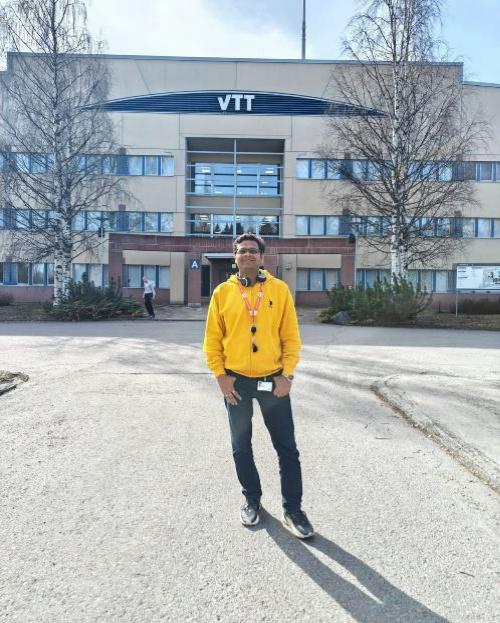
Dr. Nishu Gupta
Assistant Professor, IIIT Lucknow, India
Dr. Nishu Gupta is an Assistant Professor, IT Department, IIIT Lucknow, India. He was a Senior Scientist at the VTT Technical Research Centre of Finland Ltd, located in Oulu, Finland. He was also serving as an Integrated Researcher and collaborator in the Information Systems and Processing group at the Institute of Electronics, Telecommunications and Informatics (IEETA), Aveiro, Portugal. He is a Senior Member, IEEE.
Before this position, he was a Postdoctoral Fellow in the Smart Wireless Systems research group at the Department of Electronic Systems, Faculty of Information Technology and Electrical Engineering, Norwegian University of Science and Technology, Norway. He has worked as a Research Associate in the Smart Living Lab at the University of Fribourg, Switzerland. Before this position, he was a Postdoctoral Fellow in the Department of Information Technology at the Faculty of Computing and Information Technology at King Abdulaziz University in Rabigh, Saudi Arabia. He is also a visiting researcher at the University of Oviedo in Spain, in the Systems for Multimedia and the Internet of Things research group. He serves as a Member of the Zero Trust Architecture working group at the Ministry of Electronics and Information Technology (MeitY), Government of India. He holds a PhD in Electronics and Communication Engineering from Motilal Nehru National Institute of Technology (MNNIT), Allahabad, India (An Institute of National Importance as declared by the Government of India) with specialization in Vehicular Ad hoc Networks. His research interests include Cognitive and Cooperative MAC, Vehicular Communication Networks, Internet of Things, 5G/6G technologies, Intelligent Transportation Systems, Smart Wireless Systems.
Read More
Title: Next Generation Communication Networks: A Technical Overview of 6G Research Items
Abstract:
The rapid evolution of wireless communication technologies has opened the door to the development of sixth-generation (6G) networks, expected to transform how devices, applications, and services interconnect in a highly intelligent and autonomous manner. While 5G deployment continues globally, emerging applications such as immersive extended reality, autonomous systems, intelligent automation, and massive digital connectivity are expected to demand capabilities beyond current networks' limits. Unlike its predecessors, 6G is projected to offer ultra-low latency, massive connectivity, and terabit-level transmission speeds.
To achieve these ambitious goals, novel technologies such as Federated Learning (FL), Blockchain, and developed security mechanisms will play a vital role in future communication networks. By allowing decentralized intelligence, secure data sharing, and privacy-preserving communication, these technologies address key concerns inherent in next-generation networks. Future research should focus on optimizing the integration of these technologies, addressing scalability concerns, and enhancing their adaptability to the dynamic demands of 6G applications. Such efforts will be instrumental in realizing the full potential of 6G as a transformative communication infrastructure for the digital age. This keynote presents a technical overview of the key research directions driving the development of 6G wireless systems. The presentation also highlights challenges related to spectrum utilization, hardware constraints, network architecture, and sustainability.
Read More
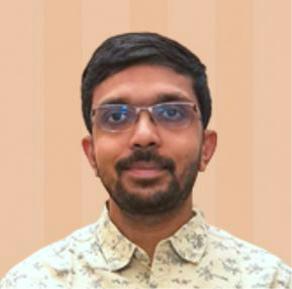
Dr. Pravin Nair
Assistant Professor, Department of Electrical Engineering, IIT Madras
Pravin Nair is currently an Assistant Professor in the Department of Electrical Engineering at IIT Madras. Prior to this, he served as Senior Chief Engineer in the AI Video Processing Labs at the Samsung Research Institute, Bengaluru. He earned his PhD from the Department of Electrical Engineering at the Indian Institute of Science (IISc). He also holds an M.Sc. by Research in Electrical Engineering from IISc and a B.Tech. in Electronics and Communication Engineering from the Amrita School of Engineering.
His research focuses on addressing longstanding challenges in image and video reconstruction for both offline and real-time settings, with particular emphasis on developing high-quality, stable, real-time algorithms for image and video processing. He has received several prestigious recognitions, including Gold Medal for the best PhD thesis dissertation at IISc Bengaluru, the Samsung Excellence Super Tech Award for the 10–100× Zoom feature in the Samsung Galaxy S24 Ultra, and the Prime Minister Early Career Research Grant from Anusandhan National Research Foundation.
Read More
Title: Recent Trends in Image Generation with Diffusion Models
Abstract:
Generative AI has made it possible to create highly realistic images from text prompts, sketches, noisy inputs, or other forms of guidance. In recent years, diffusion models have become one of the most successful approaches behind this progress, powering many modern image-generation systems. The basic idea is simple to state: start from random noise and gradually refine it until a meaningful image emerges.
Although the underlying mathematics and implementation can be complex, the visual intuition for these equations is accessible and powerful. This talk will give a broad and intuitive introduction to recent trends in image generation, with a focus on diffusion models. I will explain how these models are trained, why they generate images by reversing a noise-adding process, and how text prompts can guide the generation process. The talk will also discuss why diffusion models often produce high-quality images, why they can be slow, and why faster sampling methods are an important area of current research.
Read More
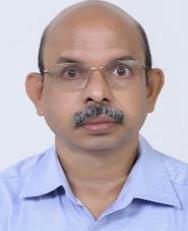
Dr. K.C. Raveendranathan
Retired Principal, College of Engineering, Trivandrum, Kerala, India
Dr. K. C. Raveendranathan graduated from the College of Engineering Trivandrum in Electronics and Communication Engineering in 1984. He worked as Design Engineer in the Broadcast Transmitters R&D group at Bharat Electronics Limited (BEL) Bangalore during March 1985 to June 1988. While working there, he was conferred a corporate award for suggesting a new motto for BEL. He joined the department of Electronics and Communication, College of Engineering Trivandrum in June 1988, as Lecturer.
He did his master’s degree in Electrical Communication Engineering, Indian Institute of Science Bangalore during August 1991 to January 1993. He earned his doctorate from the University of Kerala, in Computer Science in 2011, in the area of wireless channel equalizers. Earlier, he worked as Deputy Director (Audio Systems) at the Centre for Development of Imaging Technology (CDIT) Trivandrum during 1989-1990, on deputation. He has over 30 years of teaching experience in various levels at reputed government Engineering colleges in the state of Kerala. He is a senior member of the IEEE, Computer Society of India, a life fellow & chartered engineer of the Institution Engineers (India), and the Institution of Electronics and Telecommunication Engineers (IETE). He authored more than 25 research papers in various national/international journals/conference proceedings and published 6 books. His research interests include digital signal processing, wireless communication, simulation techniques, fuzzy engineering, optical communication, and technical communication.
Read More
Title: Best and Smart Practices for Authoring Technical Documents.
Abstract:
We live in a world where getting published is a challenging task for both young engineers and seasoned R&D engineers/researchers. The present-day norm is to get your work published or perish. Although most of the young generation are AI-native and have sufficient exposure to AI tools such as ChatGPT, Gemini, and Meta, which can facilitate the preparation of technical documents, the task of meeting the demand to have their work reported on reputable platforms remains daunting.
This is true for all who are working in the broad domain of Science, Technology, Engineering, Medicine, and Management (STEMM). This talk addresses this important aspect and offers practical insights. We delve deep into important aspects that a reviewer usually checks in a paper or technical document, before acceptance or rejection. It will also shed light on the skills a good R&D engineer/researcher should develop to publish a reader-friendly technical document of any kind-technical papers, dissertations, textbooks, reference books, monographs, or user manuals. We will also focus on challenges faced by students/faculty in locating non-predatory journals or conference proceedings, that have excellent performance metrics such as citation-index, h-index, g-index, FWCI, and so on, where they can publish the results of their original research. Smart AI-tools that can leverage the process of authoring excellent technical documents, like Grammarly, Crosscheck, Turnitin, QuillBot, Notion, and Mindgrasp will be discussed. We will conclude the talk by listing out checkpoints that a peer-reviewer will look into in any document. This will help the authors minimise rejection rate of their paper/technical article.
Read More
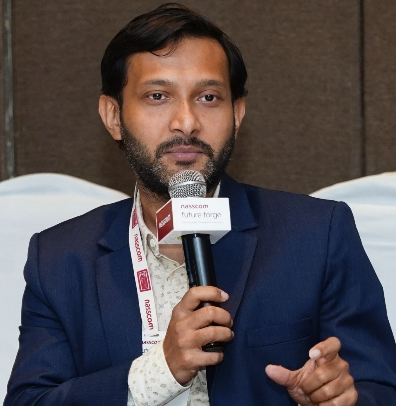
Dr. Souvick Chatterjee
Technical manager - Customer Success Engineering: MathWorks, IN - Bangalore
Souvick leads the Education Team in MathWorks for several strategic collaborations and is based out of Bangalore. He is advocating computational thinking and model-based product-oriented interdisciplinary approach in research and education partnering with universities/institutions across the country.
He is recipient of Best PhD Thesis Award and Young Scientist Award from International Society for Energy, Environment and Sustainability. He worked in University of Illinois at Chicago as postdoctoral associate and at EnterpriseWorks Chicago as strategy consultant for commercialization of academic innovations. He has co-authored multiple journal articles, book chapters and is co-inventor of 2 US patents. He completed B.E. from Jadavpur University and a dual M.S.-PhD degree from Jadavpur University and Virginia Tech. His BE is in Mechanical Engineering, MS and PhD are in Micro Electromechanical Systems. Currently, he is focusing on different electromechanical systems with applications in robotics and AI.
Read More
Title: Physical AI in Engineered Systems
Abstract:
AI is reshaping how engineers work, becoming an integral part of design and development workflows. It is being used to develop and deploy models to embedded devices, improve productivity with generative AI (GenAI), and accelerate engineering workflows with AI agents.
In this talk, we will talk about designing embedded AI systems like robotics and energy systems using MATLAB and Simulink, covering the complete workflow from data preparation and model development to deployment on resource-constrained hardware. Engineers will learn how to integrate deep learning algorithms into engineered systems while addressing constraints such as latency, memory usage, and real-time performance.
Read More
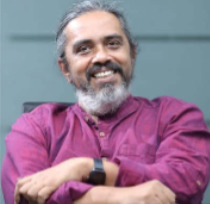
Dr. Sunil T T
Director ICFOSS, Kerala
Dr. Sunil T T is the Director of ICFOSS, Government of Kerala. His previous roles include Director of C-DIT, Consultant (IT) for the Kerala Legislative Assembly, and Principal of the College of Engineering Attingal. He holds a PhD from Department of electrical engineering IIT Bombay, He has an M.Tech. from CUSAT, and an LLB specializing in IT law.
With over 35 years of experience across academia and government, he has led engineering institutions and pioneered open-source adoption in Kerala. His research spans computer vision, edge AI, and computational analysis of Indian classical arts. He is a Senior IEEE Member, Chair of the IEEE SPS Kerala Section, and the author of Yandrachinthayude Sasthram, a Malayalam book demystifying artificial intelligence.
Read More
Title: From Neurons to Agents: Navigating the Frontiers, Fallacies, and Future of AI
Abstract:
Artificial Intelligence has moved a long way from early rule-based systems and simple statistical classifiers to today's massive foundation models and autonomous agents. This keynote walks through that journey in plain terms, connecting the intuitive ideas behind AI to the engineering that makes it work. We start with the biological inspiration for neural networks — how neurons, features, and decision boundaries led to multi-layer networks that can approximate almost any function.
We then look at the shift brought by self-attention and Transformers, and how scaling laws turned these architectures into Large Language Models and diffusion models, moving machine learning from classifying data to generating it. Next, the talk covers Agentic AI: systems that don't just answer questions but use tools, react to their environment, keep memory, and run code. From there we examine how close this brings us to Artificial General Intelligence, weighing raw scaling against harder problems like genuine reasoning, grounding, and energy limits. The final section turns to two issues that matter most to the engineering community: how AI is reshaping jobs and labor, and its double-edged role in cybersecurity — agent hijacking, automated vulnerability discovery, and deepfake detection. We close with the open-source versus open-weight debate, a reality check against the Gartner Hype Cycle, and a practical roadmap for building AI systems that are resilient, transparent, and genuinely useful.
Read More
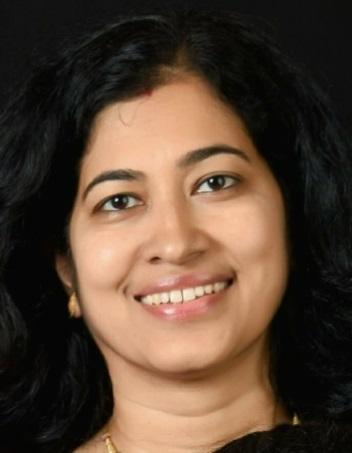
Reshma P.P.
Director, System Design | Hardware & Platform Architecture, Intel Corporation, Bengaluru, India
Technology executive with 25+ years of progressive leadership in System Design, High-Speed PCB Development, and Post-Silicon Validation across semiconductor, Telecom, and Compute domains. Currently Director of System Design at Intel CCG, driving platform architecture and cross-functional engineering strategy for client compute platforms. Track record of building high-performing global teams, influencing multi-generational product roadmaps, and delivering complex hardware programs at scale including leading the world's first 5G handset rollout.
Recognized for combining deep technical depth with strategic product vision. Core competencies include Platform System Architecture ( Compute and Mobile), Global Team Building, Cross-Functional Leadership, Circular Modular Repair friendly design, High-Speed PCB & HDI Design, Agentic AI in Hardware Workflows, Post Silicon Validation. Previous experiences include Qualcomm | Bengaluru, India, Alcatel-Lucent / HCL Technologies | India, Wipro Technologies / C-DOT (Centre for Development of Telematics) | India
Read More
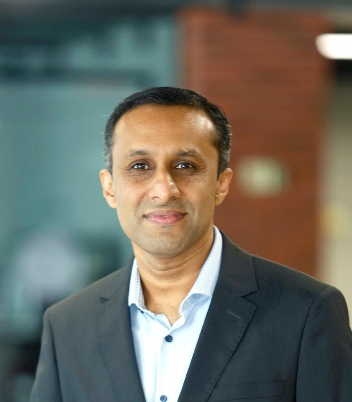
Sangeeth S Nambiar
Director – Innovation and Research Partnerships, Bosch Global Software Technologies Pvt. Ltd., Bangalore, India
Executive with 23+ years of experience combining technical expertise in AI, software engineering and embedded systems with executive-level operational and strategic leadership. Founded and scaled Bosch's Research & Technology Center India from the ground up to a 110-person, $8M+ organization — delivering 30+ technology transfers and 25+ patents in a single year.
Proven track record of setting up and leading global research, engineering, and AI organizations generating high business impact, securing Board-level alignment, and managing multi-million-dollar R&D portfolios. Experienced in leading research and advanced engineering teams that developed AI methods and tools for data curation, labelling, model training and validation, improving efficiency of AI model development. Experienced in driving enterprise-wide engineering transformation — including a global program that achieved a 25% gain in software engineering efficiency, GCC operations, leading cross-functional teams across the US, Europe, and Asia, and strategic partnerships with academia, standards bodies, and government ecosystems.
Read More